The card, explained

The Divvy Card: spend limits that enforce themselves

The card that made Divvy famous is now the BILL Spend & Expense card. Same idea, sharper tools: every card — physical or virtual — carries its own budget, merchant rules, and real-time enforcement.
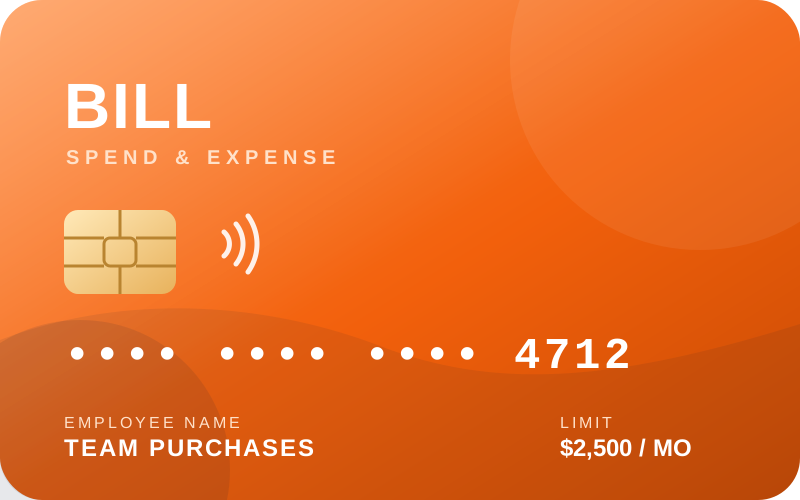
BILL Spend and Expense corporate card with chip, employee name, and monthly limit Real-time limit checks Declines explained instantly
Chapter 1 — Card types

Physical cards, virtual cards, one control model

Physical cards

For employees who buy in the real world: travel, meals, supplies, site purchases. Each card is tied to one person, one budget, and a defined limit. Activation takes two minutes in the app — see the activation steps.

Virtual cards

Created instantly for subscriptions, vendors, or one-time purchases. Give each vendor a dedicated card number with its own ceiling — if a number leaks, only that card is affected, and it can be deleted in one click.

Use caseRecommended card typeSuggested control
Employee travelPhysical cardMonthly limit + travel-only budget pool
SaaS subscriptionsVirtual card per vendorRecurring limit matching the contract value
Marketing campaignsVirtual card per campaignOne-time limit, expires with the campaign
Office suppliesShared physical cardWeekly limit with merchant-category rules
Contractor paymentsVirtual cardSingle-use limit set to the invoice amount
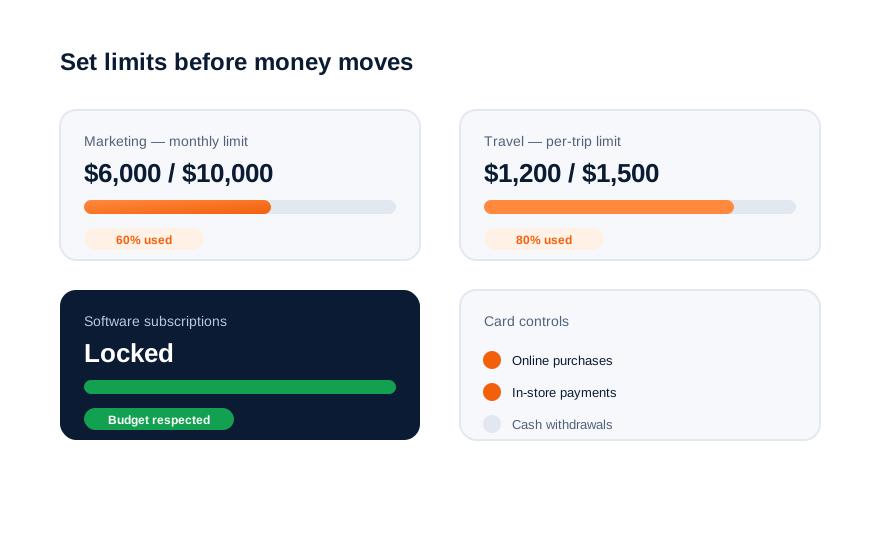
Spend control settings showing budget limits, usage bars, and card-level switches
Limits, usage tracking, and on/off switches for purchase channels — all configurable per card.
Chapter 2 — Controls

Controls that act before the purchase

The defining Divvy idea: a card that declines itself when it should. Every authorization passes through the rules below in milliseconds.

  • Limits by amount and time. Set a ceiling per transaction, per day, or per month — hard stops or soft warnings.
  • Merchant and category rules. Allow business categories, block everything else by default.
  • Channel switches. Enable or disable online, in-store, and cash access per card.
  • Instant lock. Freeze a card from the app the moment it goes missing; unfreeze when it turns up.
  • Budget pools. Cards draw from shared department budgets, so overspend in one place is visible everywhere.

Declines are informative. When a transaction is blocked, the app tells the employee exactly which rule fired — no mystery, no embarrassment at the register.
Chapter 3 — Acceptance & protection

Accepted worldwide, monitored constantly

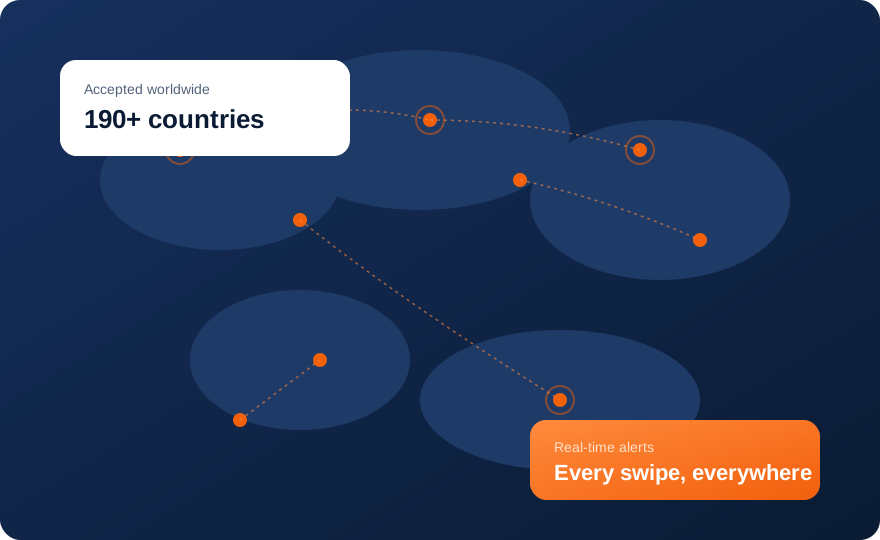
  • Global acceptance. The card works wherever the underlying network is accepted — more than 190 countries, online and in-store.
  • Fraud monitoring. Transactions are screened in real time for unusual patterns, with alerts pushed to the app instantly.
  • Zero liability structure. Unauthorized transactions on company cards follow the platform's fraud protection terms rather than personal-card risk.
  • Single-purpose numbers. Virtual cards mean a leaked number exposes one limited card — not a corporate account.
Manage cards from the mobile app
World map showing global acceptance points of the BILL corporate card
Chapter 4 — Best practices

How finance teams run cards well

One person, one card

Never share physical cards. Personal assignment makes receipts, approvals, and accountability automatic.

Right-size limits quarterly

Review usage every quarter. Limits that were right at launch drift out of alignment as teams and prices change.

A vendor card per vendor

Dedicated virtual cards per subscription turn reconciliation into pattern matching and contain breach damage.

Chapter 5 — FAQ

Divvy card questions, answered

What is the Divvy card?
A corporate payment card — physical or virtual — with spending limits and merchant controls enforced at the moment of purchase. It now operates as the BILL Spend & Expense card with identical behavior.
Are virtual cards supported?
Yes. Virtual cards can be created instantly for subscriptions, vendors, or one-time purchases, each with its own limit and expiration date.
Where is the card accepted?
Wherever the underlying card network is accepted — more than 190 countries, both online and in-store.
What happens when a limit is exceeded?
The transaction is declined in real time, and both the employee and the administrator receive an alert explaining which rule blocked it.
Can I lock a lost card?
Yes — instantly, from the mobile app or the web dashboard. Unlock it just as fast if it turns up; otherwise order a replacement.

Put the card to work

See how transactions become coded, reconciled records — automatically.

Expense management guide Integrations